Contact:Mr. Sun Ling
Email:meng@shandonghg.com
whats app:+86-15863158497
Add:: No. 2228 Tianchen Road, Jinan, China
The shape of your mash tun isn’t aesthetic – it’s algebraic. A shallow, wide bed yields different sugars than a deep, narrow one. Before you pour another grain bill, understand how vessel geometry dictates efficiency, mouthfeel, and brewhouse rhythm. Let us help you map your ideal silhouette.
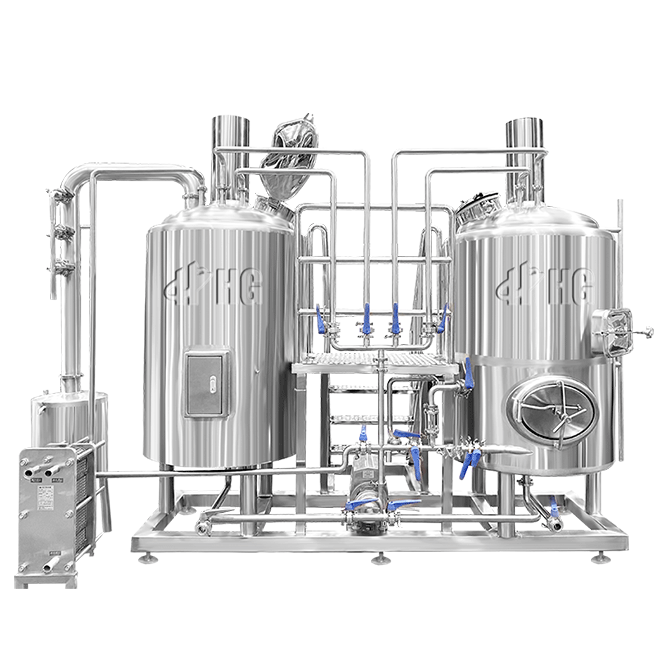
When you stand before your mash tun, you’re not just looking at a stainless steel vessel. You’re looking at a mathematical equation that will convert grain into fermentable sugar – or fail to. The geometry of that vessel decides how thoroughly water kisses every husk, how evenly temperature travels, and how much of your malt’s potential ends up in the kettle versus the spent grain bin.
Most brewers inherit a brewhouse shape and learn to work around it. But what if you could choose the shape that works for your recipes?
The Wide-Shallow Philosophy
A mash tun with a large diameter relative to its depth creates a shallow grain bed. This is the classic English approach. The benefits are real: faster runoff, less risk of stuck mashes, and a gentle extraction that preserves delicate malt character. Shallow beds also heat and cool more uniformly, reducing the risk of hot spots that denature enzymes.
But there’s a trade-off. Shallow beds require more floor space for the same grain load. And if you brew high-gravity beers with massive grists, you may find the bed depth too thin to create enough natural filtration.
The Deep-Narrow School
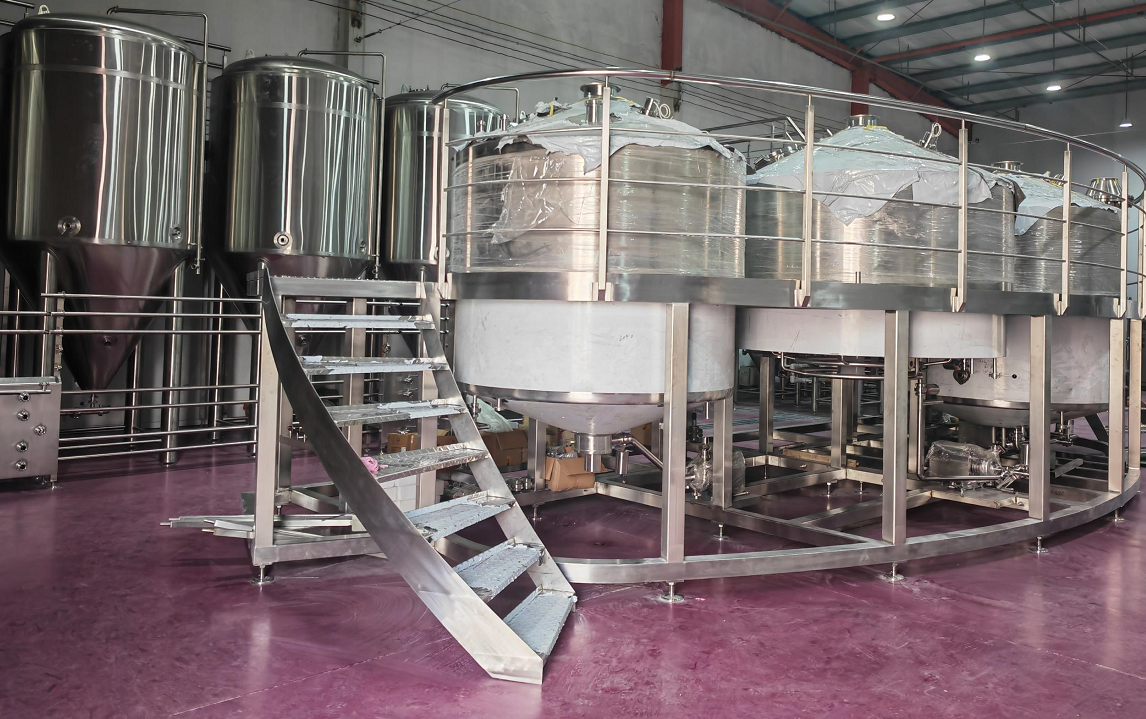
German brewhouses often favor taller, narrower mash tuns. A deep bed increases hydrostatic pressure, which can improve extraction efficiency – sometimes by 3-5%. The weight of the grain itself helps filter the wort more clearly, producing a brilliant runoff without extra processing.
However, deep beds are more prone to compaction. Rake arms become essential, not optional. And if your mash tun is too deep, the weight can crush the grain bed, leading to slow runoff and astringency from overworked husks.
The Middle Path – And Why It’s Not Always Right
Many equipment suppliers default to a “standard” aspect ratio (height:diameter of 0.8:1). It works for most breweries, but “most” doesn’t mean “yours.” A brewery specializing in hazy IPAs with high oat content needs different geometry than a lager house running 12-hour turns.
We’ve seen 15-barrel breweries struggle with efficiency until they swapped to a shallower tun. We’ve watched nano-breweries double their output by deepening their bed by just 200mm.
How We Help You Find Your Shape
Before we weld a single seam, we ask: What beers do you love to brew? What’s your typical grain bill weight? How much time do you want to spend lautering? Then we model your ideal vessel using computational fluid dynamics – no guesswork, no “standard” sizes.
We’ll show you how changing the radius by 10% affects your runoff speed. We’ll simulate a stuck mash scenario before it happens. And we’ll deliver a mash tun that feels like it was made for your recipes – because it was.
Your Brewery’s Signature Starts Here
The shape of your mash tun becomes the signature of every beer you make. Don’t leave that signature to chance. Whether you’re planning a 3-barrel brewpub or a 50-barrel regional facility, we’ll help you map the geometry that unlocks your grain’s full potential.
Send us your typical grain bill and desired batch size. We’ll reply with a preliminary aspect ratio recommendation – no obligation, just engineering insight.
ADDRESS No. 2228 Tianchen Road, Jinan, China
Copyright @ 2026 Shandong Huiguan Engineering Equipment Co., Ltd.