Contact:Mr. Sun Ling
Email:meng@shandonghg.com
whats app:+86-15863158497
Add:: No. 2228 Tianchen Road, Jinan, China
Vibrations from compressors and foot traffic stress yeast. Few brewers consider micro-vibration, yet it affects flocculation and ester profiles. Discover how isolating tank feet and choosing the right cellar layout preserves the quiet dignity of fermentation. We design for stillness.
You’ve dialed in your temperature profile, pitched the perfect cell count, and oxygenated with surgical precision. But your yeast is still unhappy. The culprit might not be in your recipe – it might be under your feet.
Every footstep, every passing forklift, every humming compressor sends micro-vibrations through the concrete floor. Those vibrations travel up your fermenter’s legs, into the cone, and directly into a suspension of living, sensitive microorganisms. Yeast cells don’t have ears, but they feel. And what they feel changes how they behave.
The Hidden Stressor No One Talks About
Research from fermentation science labs has shown that low-frequency vibration can delay flocculation by up to 20%. Yeast under mechanical stress produces higher levels of esters like isoamyl acetate (banana) and ethyl acetate (solvent) – sometimes desirable in a hefeweizen, rarely in a pilsner. More troubling, vibration has been linked to premature autolysis, releasing off-flavors and haze into your bright beer.
But most brewery floors are designed for drainage and cleaning, not isolation. The result? A cellar that buzzes with invisible energy, and beer that never quite tastes as clean as it should.
How Vibrations Enter Your Tanks
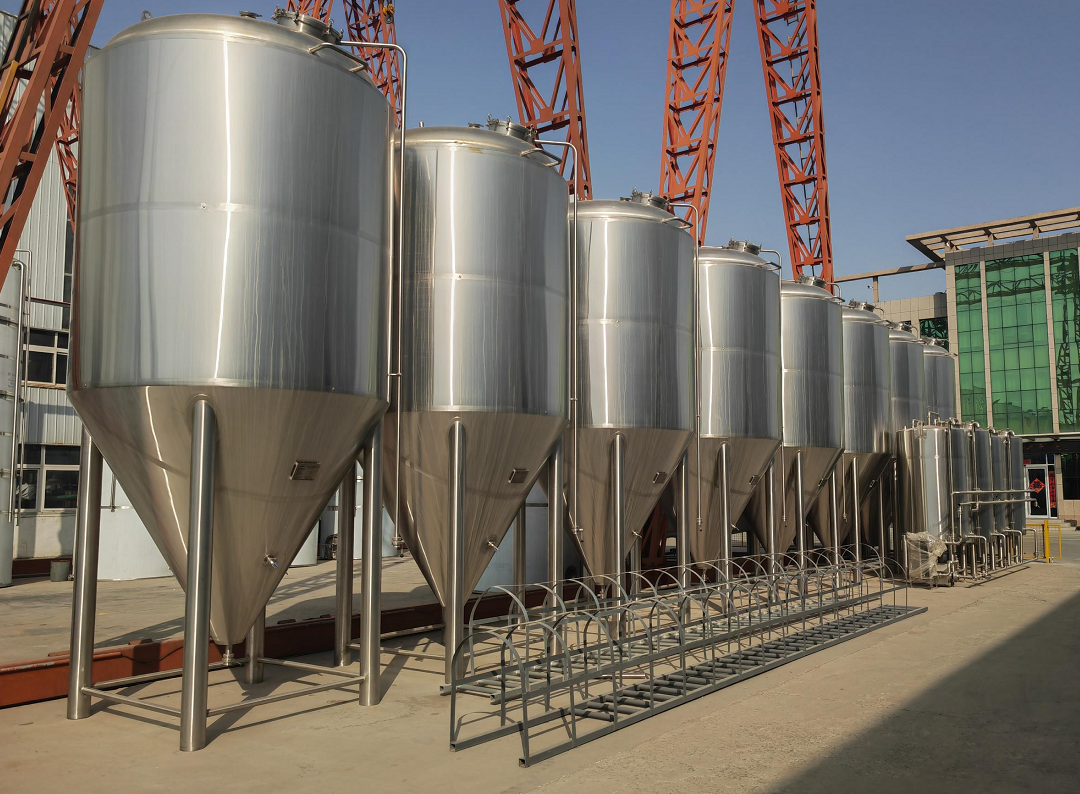
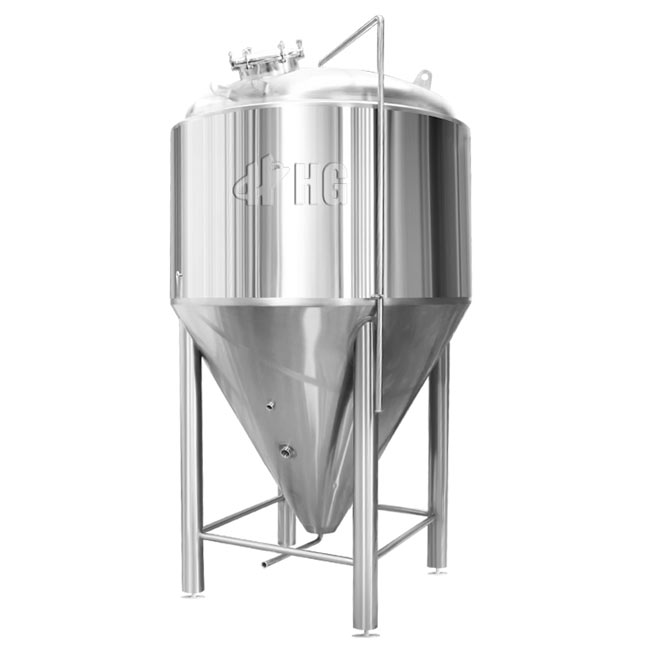
It starts at the tank feet. Standard stainless steel legs bolted directly to concrete create a rigid bridge for vibration. Every step within ten feet sends a shockwave. Every time a centrifuge spins up, the entire floor resonates.
Then there’s the human factor. Busy cellars see constant foot traffic – brewers checking gravity, cleaning crews with hoses, forklifts delivering grain. Each impact radiates outward.
Finally, mechanical rooms. Your air compressor, glycol chiller, and pumps might be in a separate room, but their foundations connect through the slab. That low hum you ignore? Your yeast hears it 24/7.
The Sound of Stillness – Engineering Isolation
We approach fermentation floors like recording studios approach drum risers: isolate everything.
First, we specify vibration-damping tank feet. Our standard feet include neoprene or silicone pads that absorb up to 90% of low-frequency transmission. For larger vessels, we offer spring-mounted bases with adjustable leveling – the same technology used in precision optics labs.
Second, we recommend zoning. Keep high-traffic corridors away from active fermenters. Route forklift paths around the quiet zone. Place sampling ports and manways on the side opposite foot traffic.
Third, we work with your floor contractor to install expansion joints and floating slabs in the cellar. A concrete pad that is physically separated from the rest of the building’s foundation stops vibration before it starts.
Real-World Results
A 20-barrel brewery in Colorado installed our vibration-isolated feet on twelve fermenters. After one month, the head brewer reported: “Our lager clarity improved noticeably. We’re harvesting yeast two generations longer. And the cellar just feels calmer – staff notice it too.”
Another client, a brewpub with upstairs apartments, had complained about noise transmission. Isolating the tanks reduced structural hum so much that the neighbor stopped calling.
Beyond Vibration – The Quiet Brewery Advantage
A silent fermentation floor isn’t just about yeast health. It’s about quality of work. Brewers who work in a calm, quiet cellar make fewer mistakes. They hear unusual pump noises earlier. They take more careful readings. Silence breeds precision.
And for taprooms where fermenters are visible behind glass, that absence of rattle and rumble creates an almost cathedral-like atmosphere. Customers feel the reverence without understanding why.
Designing Your Sanctuary of Stillness
Every brewery has a unique vibration profile. We start by measuring your floor’s resonant frequency and mapping traffic patterns. Then we specify isolation solutions – from simple pads to full floating slabs – matched to your tank sizes and cellar layout.
We don’t just sell tanks. We sell the conditions in which great beer is born. And great beer is born in stillness.
Send us a sketch of your planned cellar or an existing floor plan. We’ll identify the three biggest vibration risks and propose low-cost fixes – even if you never buy a single tank from us.
ADDRESS No. 2228 Tianchen Road, Jinan, China
Copyright @ 2026 Shandong Huiguan Engineering Equipment Co., Ltd.