Contact:Mr. Sun Ling
Email:meng@shandonghg.com
whats app:+86-15863158497
Add:: No. 2228 Tianchen Road, Jinan, China
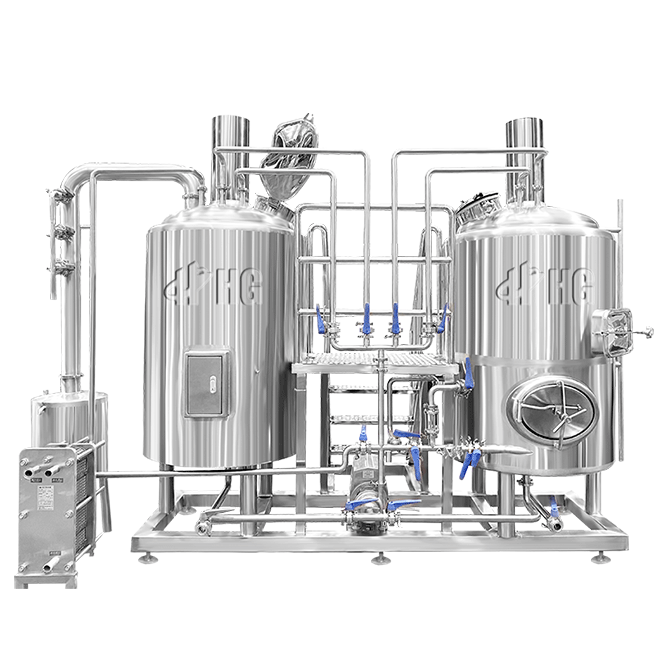
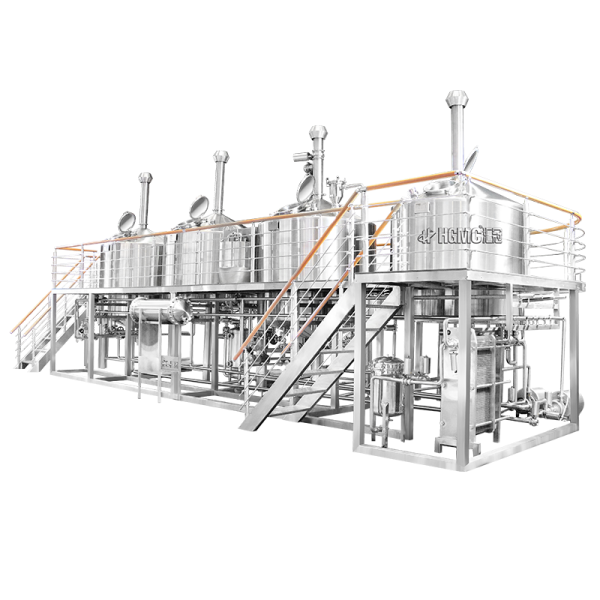
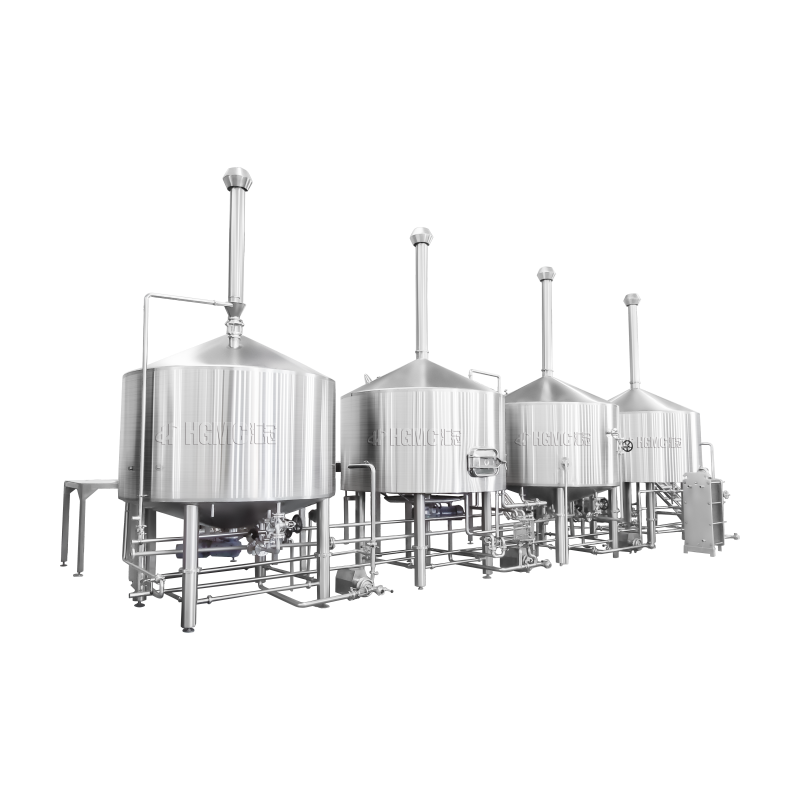
A commercial beer brewing system works by controlling a sequence of physical and biological processes that convert malt, water, hops and yeast into finished beer.
What happens first?
The process begins with malt preparation.
Malt is milled to expose the starch inside the grain while retaining enough husk structure for efficient lautering.
The milled malt enters the mash tun.
What happens during mashing?
During mashing, malt is mixed with hot brewing liquor.
Enzymes convert starch into fermentable sugars.
Temperature control is important because different temperature ranges influence enzyme activity and wort composition.
How does lautering work?
After mashing, the liquid wort must be separated from the spent grain.
The lauter system uses the grain bed as a filtration medium.
The resulting wort is transferred to the brew kettle.
Why is wort boiled?
Boiling performs several functions.
It helps sterilize the wort, concentrates the wort and enables hop utilization.
Boiling duration and hop additions depend on the beer recipe.
What happens in the whirlpool?
After boiling, the wort can be transferred to a whirlpool vessel.
Controlled flow creates a vortex that helps separate trub and hop material from the wort.
The clarified wort is then sent through a heat exchanger.
How is wort cooled?
A plate heat exchanger is commonly used to rapidly cool wort to the appropriate fermentation temperature.
Cold water and/or glycol systems can be used depending on the brewery design.
What happens after cooling?
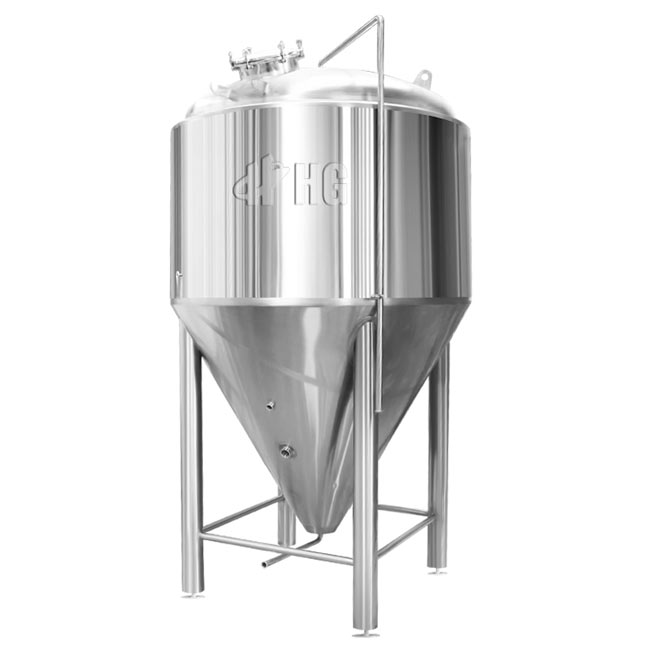
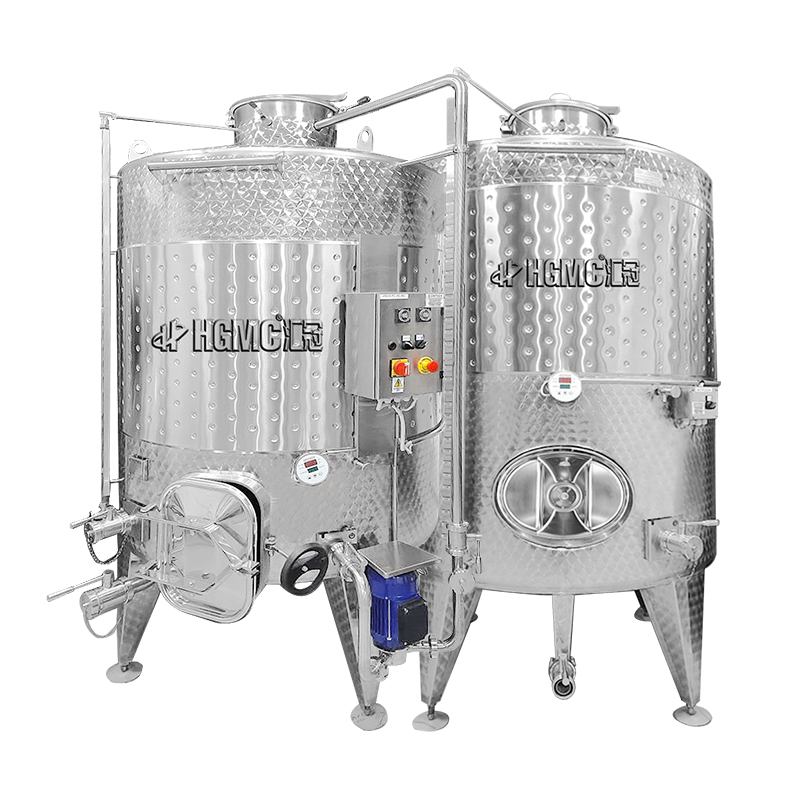
The cooled wort enters a fermentation tank.
Yeast is added, and fermentation begins.
Temperature and pressure can be controlled according to the beer style and fermentation process.
Where does the finished beer go?
After fermentation and conditioning, beer may be transferred to a bright beer tank.
It can then be carbonated and sent to:
Kegs
Bottles
Cans
Other approved packaging formats
What controls the process?
Commercial systems may use manual, semi-automatic or fully automated controls.
Sensors can monitor temperature, pressure, flow and tank conditions.
PLC and HMI systems can coordinate pumps, valves and heating or cooling systems.
Final answer
A commercial beer brewing system works as a connected process:
Mashing → Lautering → Boiling → Whirlpool → Cooling → Fermentation → Conditioning → Packaging
The quality and efficiency of the brewery depend on how well these stages are integrated.
ADDRESS No. 2228 Tianchen Road, Jinan, China
Copyright @ 2026 Shandong Huiguan Engineering Equipment Co., Ltd.