Contact:Mr. Sun Ling
Email:meng@shandonghg.com
whats app:+86-15863158497
Add:: No. 2228 Tianchen Road, Jinan, China
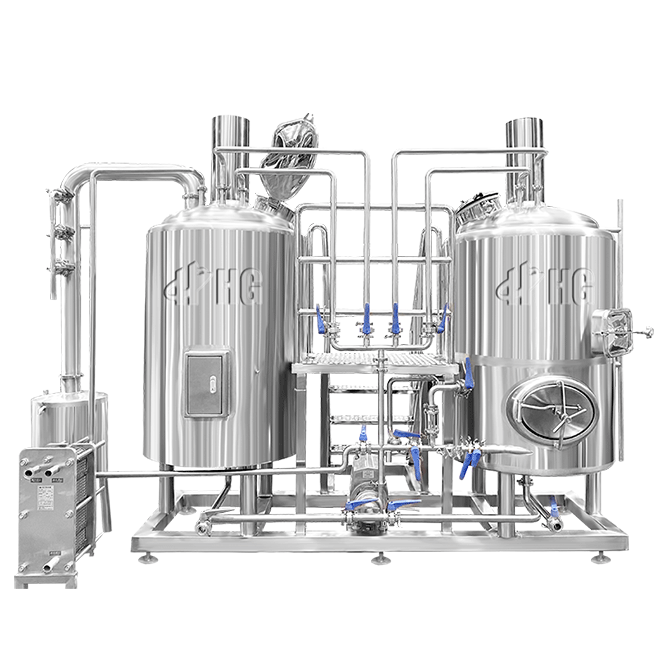
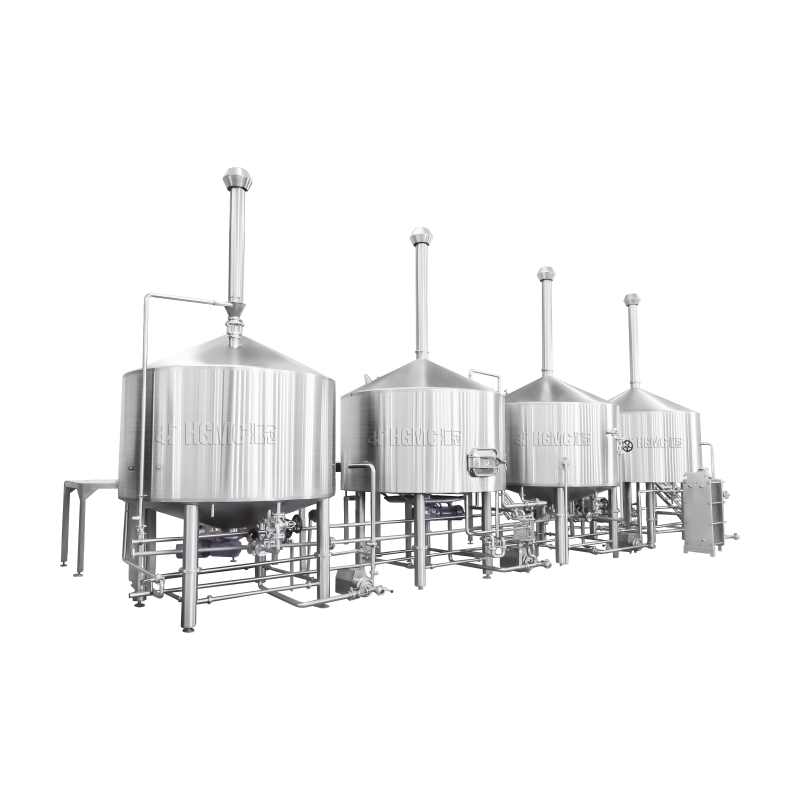
Most brewers focus on tank sizes and material grades. But the real magic — and the real pitfalls — lie in the flow path: how your mash moves, how your wort is separated, how your kettle transfers heat, and how your chilling system drops temperature.
The mash mixer: homogeneity is everything
A poorly designed mash vessel with weak agitation creates temperature gradients — hot spots denature enzymes, cold spots leave starch ungelatinized. This directly reduces fermentable sugar yield and leaves you with lower alcohol and higher residual dextrins. Modern mash vessels use dual-impeller side-entry mixers that achieve uniform temperature within ±0.5°C across the entire bed. This alone can boost your extraction efficiency by 3–4%.
The lauter tun: clarity and speed trade-off
The lauter tun’s false bottom design and raking mechanism determine how fast you can run off wort and how clear it is. A shallow false bottom with large slots lets through more husk material, increasing turbidity and risking off-flavors (particularly astringency). Premium systems use deep-bed, narrow-slot false bottoms with variable-speed rakes that maintain a consistent grain bed porosity. This reduces runoff time by 20% while producing crystal-clear wort — and clearer wort ferments cleaner, reducing diacetyl and sulfur compounds.
The whirlpool: trub separation that saves hops
After boiling, you need to separate hot break and hop debris. A whirlpool with an optimal inlet angle and tangential flow design creates a strong cone of trub in the center, leaving bright wort at the perimeter. Poor designs create weak vortices, meaning more trub carries over to the fermenter — which binds to yeast and reduces hop utilization by 10–15%. Over a year, that wasted hops can cost you thousands.
The heat exchanger: the unsung hero of freshness
Plate-and-frame heat exchangers are standard, but not all are equal. The number of plates, the corrugation pattern, and the cooling media flow rate determine how fast you drop from boiling to pitching temperature. Faster chilling (under 30 minutes) preserves volatile hop aromas and reduces DMS (dimethyl sulfide) formation. Premium exchangers use turbulent-flow plates with high heat-transfer coefficients, achieving 95%+ thermal efficiency. They also have self-draining designs that prevent trapped wort from spoiling between brews.
Why layout matters for expansion
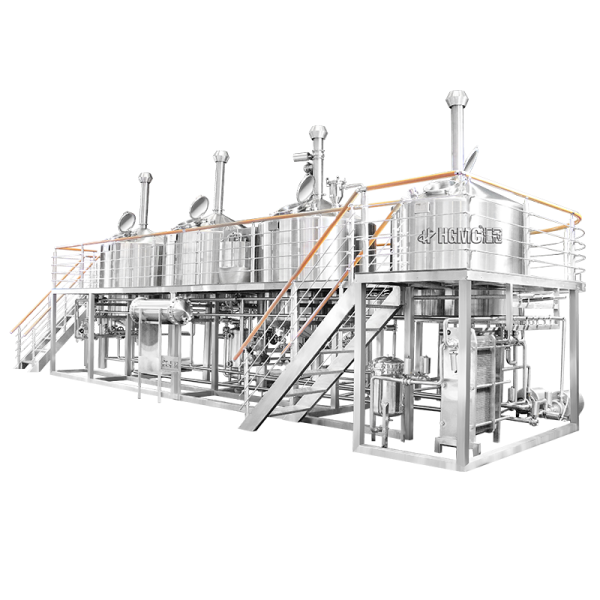
Many breweries place their brewhouse in a corner, only to realize later that adding a second fermenter row requires moving pipes, electrical conduits, and glycol lines. A smart layout reserves at least 30% additional floor space around the brewhouse for future tanks and leaves utility stubs (capped-off lines) at designated expansion points. This forward-looking design can save you 3–6 months of construction time and $20,000–$50,000 in rework costs when you scale.
Your brewhouse is more than a set of vessels — it’s a flow system. Let our engineering team review your floor plan and propose an optimized layout that maximizes both quality and future flexibility. Leave a message with your space dimensions and target capacity, and we’ll send you a conceptual design proposal.
ADDRESS No. 2228 Tianchen Road, Jinan, China
Copyright @ 2026 Shandong Huiguan Engineering Equipment Co., Ltd.